There is no single average truck accident settlement in Virginia because each claim depends on the severity of the injuries, the strength of the evidence, and the available insurance. Broadly, soft-tissue injury claims resolve in the tens of thousands, cases involving surgery or permanent injury often reach the mid-six figures, and catastrophic or fatal crashes can reach seven figures.
This article from The Johnson Injury Firm explains how those ranges are built, why tractor-trailer claims tend to run higher than car accident claims, which factors insurers use to value a case, and the Virginia rules that can shrink or eliminate a claim. If you were hurt on I-95, I-64 or I-295, our Richmond truck accident lawyer page explains how we handle these cases.
Key Takeaways
- Truck accident settlements in Virginia range from tens of thousands of dollars for soft-tissue injuries to seven figures for catastrophic or fatal crashes, and every figure depends on the facts of the case.
- Federal rules under 49 CFR 387.9 require most interstate carriers hauling non-hazardous freight to carry at least $750,000 in liability coverage, far more than the $50,000 per person minimum for Virginia car policies.
- Virginia places no cap on compensatory damages in a truck accident case, but Va. Code 8.01-38.1 caps punitive damages at $350,000.
- Trucking claims often involve several defendants, including the driver, the motor carrier, a freight broker, the shipper, and maintenance contractors, each with its own insurance.
- Virginia’s pure contributory negligence rule can bar any recovery if the trucking company proves the injured person shared even a small part of the fault.
- Under Va. Code 8.01-243(A), most Virginia truck accident lawsuits must be filed within two years of the crash.
How much is a truck accident settlement worth in Virginia?
A truck accident settlement equals the injured person’s economic losses (medical bills, future care, lost wages,s and lost earning capacity) plus non-economic losses (pain, suffering, inconvenience, disfigurement,t and loss of enjoyment of life), discounted for the risk of losing at trial. The ranges below are broad illustrations tied to injury severity, not predictions for any particular case and not results of The Johnson Injury Firm.
Settlement ranges by injury severity
- Soft-tissue injuries (sprains, strains, whiplash, bruising). These claims commonly settle in the tens of thousands of dollars. Medical bills are modest, treatment ends within months, and there is no permanent impairment.
- Fractures and injuries requiring surgery. When a crash causes broken bones, herniated discs, surgical repair, or months of rehabilitation, settlements frequently move into the low to mid six figures, driven by larger medical bills and longer time away from work.
- Permanent and catastrophic injuries. Traumatic brain injuries, spinal cord damage, amputations, and severe burns often involve lifetime care costs and lost careers. These cases can reach the high six figures and, in many instances, seven figures.
- Wrongful death. Fatal truck crashes produce claims for the family’s financial support, lost companionship, funeral costs, and the decedent’s suffering. Seven-figure outcomes are common when liability is clear, and coverage is available.
Why do truck accident settlements run higher than car accident settlements?
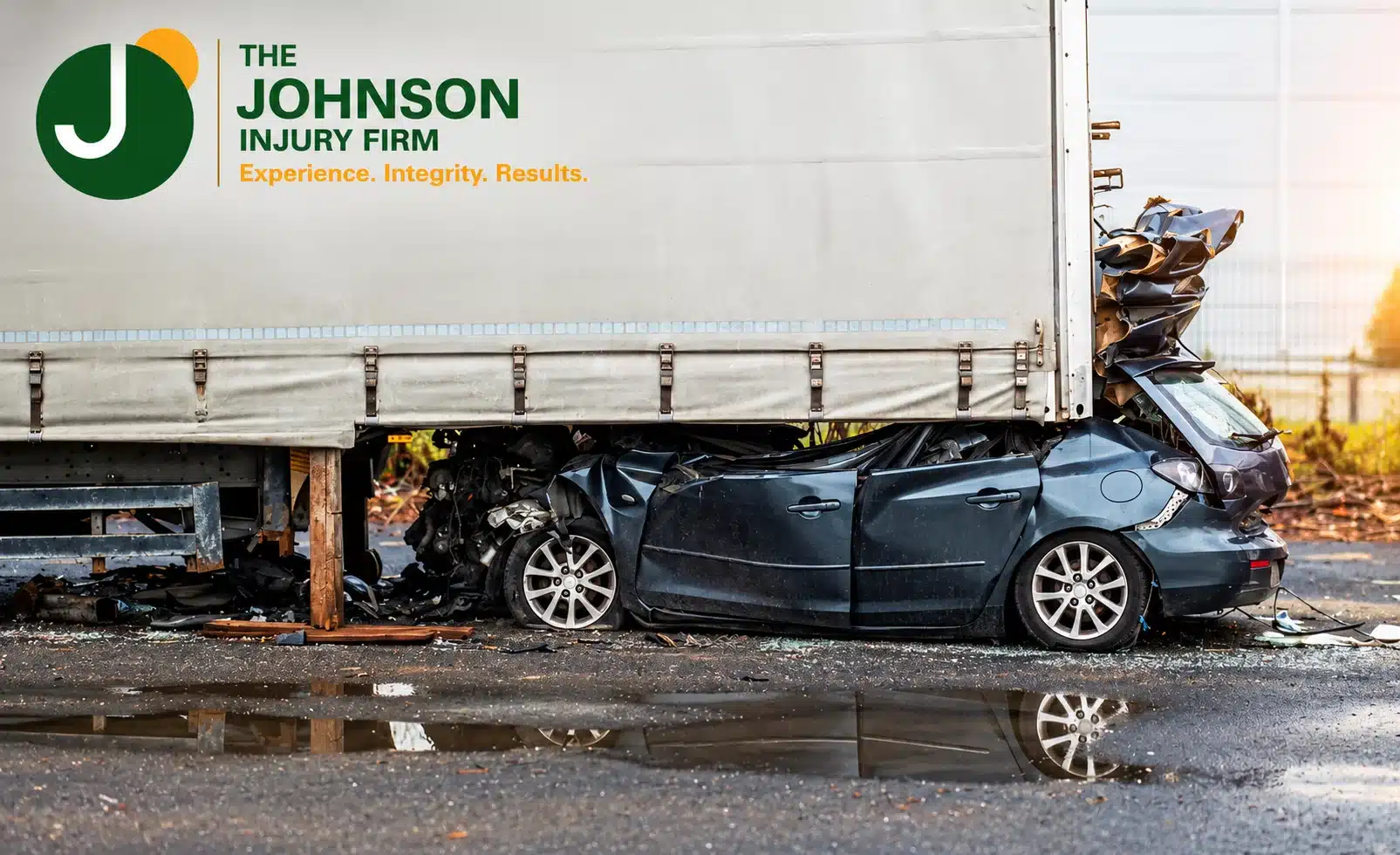
Truck accident settlements are higher for two reasons: injuries are worse, and more insurance money is available to pay for them. A loaded tractor-trailer can weigh 80,000 pounds, roughly twenty times a passenger car, so collision forces are far greater.
Federal minimum insurance for trucking companies
Under 49 CFR 387.9, a for-hire motor carrier hauling non-hazardous property in interstate commerce in a vehicle rated at 10,001 pounds or more must carry at least $750,000 in liability coverage. Carriers hauling oil or certain hazardous materials must carry $1,000,000, and carriers hauling the most dangerous hazardous cargo must carry $5,000,000. Many large carriers buy coverage well above these minimums.
Compare that to a Virginia passenger car, where Va. Code 46.2-472 requires only $50,000 per person and $100,000 per accident for policies issued on or after January 1, 2025. A serious injury in a car crash often exceeds the at-fault driver’s policy; the same injury in a truck crash usually does not.
Multiple defendants and multiple policies
A car crash usually involves one at-fault driver and one policy. A truck crash can involve several responsible parties, each with its own coverage. Our article on who you can sue after a serious truck crash covers the full list, but the most common defendants are:
- The truck driver, for speeding, fatigue, distraction, or impairment.
- The motor carrier, for negligent hiring, training, supervision, or hours-of-service violations, and for the driver’s negligence under the doctrine of respondeat superior.
- A freight broker or shipper, when it selected an unsafe carrier or loaded cargo improperly.
- A maintenance contractor, when brake, tire, or lighting failures contributed to the crash.
No cap on compensatory damages in Virginia
Virginia does not limit the compensatory damages a jury can award for medical expenses, lost income, pain and suffering,g or disfigurement in a truck accident case. The one cap that applies is on punitive damages: under Va. Code 8.01-38.1, punitive damages in any action cannot exceed $350,000. Punitive damages are rare and require proof of willful or wanton conduct, such as a drunk or knowingly fatigued driver, but the uncapped compensatory side is what drives most truck settlement values.
What factors do insurers use to value a truck accident claim?
Trucking insurers and their defense teams evaluate a claim by estimating what a Richmond jury would likely award, then adjusting that number for the chance they win outright. The main inputs are:
- Medical expenses, past and future. Billed charges; the need for future surgery, therapy, medication, and assistive equipment, usually supported by a treating physician or life care planner.
- Lost income and earning capacity. Wages lost during recovery plus the reduction in what the injured person can earn over a working lifetime.
- Permanency and impairment. A permanent injury supported by a physician’s impairment rating raises value substantially.
- Liability evidence. Electronic logging device data, dashcam video, engine control module downloads, the driver’s qualification file, drug and alcohol test results, and the post-crash inspection report.
- Credibility and consistency. Gaps in treatment, prior injuries to the same body part, and inconsistent statements all lower an insurer’s number.
Insurers rarely volunteer a fair number on the first pass. Our article on why insurance companies undervalue truck accident claims explains the tactics we see most often, from quick lowball offers to disputed medical necessity.
Can contributory negligence reduce a Virginia truck accident settlement?
It can reduce it to nothing. Virginia follows pure contributory negligence, meaning that if the trucking company proves the injured person’s own negligence proximately caused the crash, the injured person recovers nothing. The Supreme Court of Virginia confirmed in Rascher v. Friend (2010) that the defendant bears the burden of proving both the plaintiff’s negligence and that it directly contributed to the accident.
In practice, trucking defense teams look for anything that shifts blame: following too closely in a truck’s blind spot, merging late at the I-95/I-64 interchange, changing lanes without a signal on I-295, or speeding. Because this defense is all or nothing, a truck claim’s settlement value is closely tied to how convincingly the evidence places fault on the truck driver and carrier alone. The Johnson Injury Firm protects against this by investigating early, before the carrier’s rapid-response team shapes the record.
How long does a truck accident settlement take in Virginia?
Most serious truck accident claims take 1 to 3 years to resolve, and some take longer if they go to trial. The timeline depends on medical recovery: a claim should not settle until the injured person reaches maximum medical improvement, because a settlement release ends the claim even if the injury gets worse later.
Under Va. Code 8.01-243(A), a personal injury lawsuit must be filed within two years of the crash. Wrongful death claims have their own two-year deadline measured from the date of death. Claims above $50,000 are filed in Circuit Court, which for Richmond crashes means the Richmond Circuit Court in the John Marshall Courts Building, or the Henrico or Chesterfield Circuit Courts when the crash or the defendants are located there.
How Our Attorneys Build the Value of a Truck Accident Claim
Truck crashes on Richmond’s interstate corridors produce a large volume of evidence, and much of it is overwritten or discarded within months unless someone demands that it be kept. These are the steps The Johnson Injury Firm takes early in a truck case:
- Send a spoliation letter to the carrier and its insurer demanding preservation of the electronic logging device data, dashcam footage, driver qualification file, drug and alcohol testing records, maintenance logs, dispatch records, and the bills of lading.
- Obtain the Virginia State Police or local crash report and any commercial vehicle inspection report completed after the crash.
- Identify every potentially responsible party and every policy, including the carrier’s primary and excess coverage, the broker’s coverage and any umbrella policies.
- Document the injuries completely, including prompt treatment, consistent follow-up,p and specialists who can speak to permanency. The approach we describe for valuing your injury case applies with extra force in truck cases.
- Address contributory negligence head-on by reconstructing the crash with physical evidence rather than relying on the trucking company’s version.
Frequently Asked Questions
What is the average semi truck accident settlement?
No reliable single average exists because settlement values depend on injury severity, available insurance, and the strength of the fault evidence. As a broad illustration, soft-tissue claims often settle in the tens of thousands of dollars, surgical and permanent injury claims in the mid-six figures, and catastrophic or fatal crashes in the seven figures.
Why is a truck accident settlement higher than a car accident settlement?
Truck crashes cause more serious injuries, and trucking companies carry far more insurance. Under 49 CFR 387.9, most interstate carriers must have at least $750,000 in liability coverage, while Virginia car policies need only $50,000 per person. Truck cases also tend to involve several defendants with separate policies.
Does Virginia cap damages in truck accident cases?
Virginia has no cap on compensatory damages, including medical bills, lost income, pain and suffering, or disfigurement. Punitive damages, which require willful or wanton conduct, are capped at $350,000 under Va. Code 8.01-38.1.
Can I still recover if I was partly at fault for a truck accident in Virginia?
Under Virginia’s pure contributory negligence rule, if the trucking company proves your negligence proximately caused the crash, you recover nothing. The company bears the burden of proving that, which is why early evidence preservation matters so much in Virginia truck cases.
How long do I have to file a truck accident lawsuit in Virginia?
Va. Code 8.01-243(A) gives you two years from the crash date to file a personal injury lawsuit. Wrongful death claims must be filed within two years of the date of death. Settlement negotiations do not extend these deadlines.
Who pays a truck accident settlement?
Insurers usually pay the settlement for the responsible parties, which can include the truck driver, the motor carrier, a freight broker, the shipper, and a maintenance contractor. Larger claims may draw on both a carrier’s primary policy and its excess or umbrella coverage.
Get an Honest Valuation From The Johnson Injury Firm
The average truck accident settlement is a starting point for understanding your claim, not an answer to what your case is worth. The real number depends on your injuries, the trucking company’s records, the coverage available, and how well the evidence counters the contributory negligence defense.
The Johnson Injury Firm investigates truck crashes across Richmond, Henrico County, and Chesterfield County, preserves evidence carriers would rather not share, and pursues every responsible party. Learn more about our Richmond truck accident attorneys, then schedule a free consultation or call (804) 587-8423. We charge no fee unless we recover compensation for you.