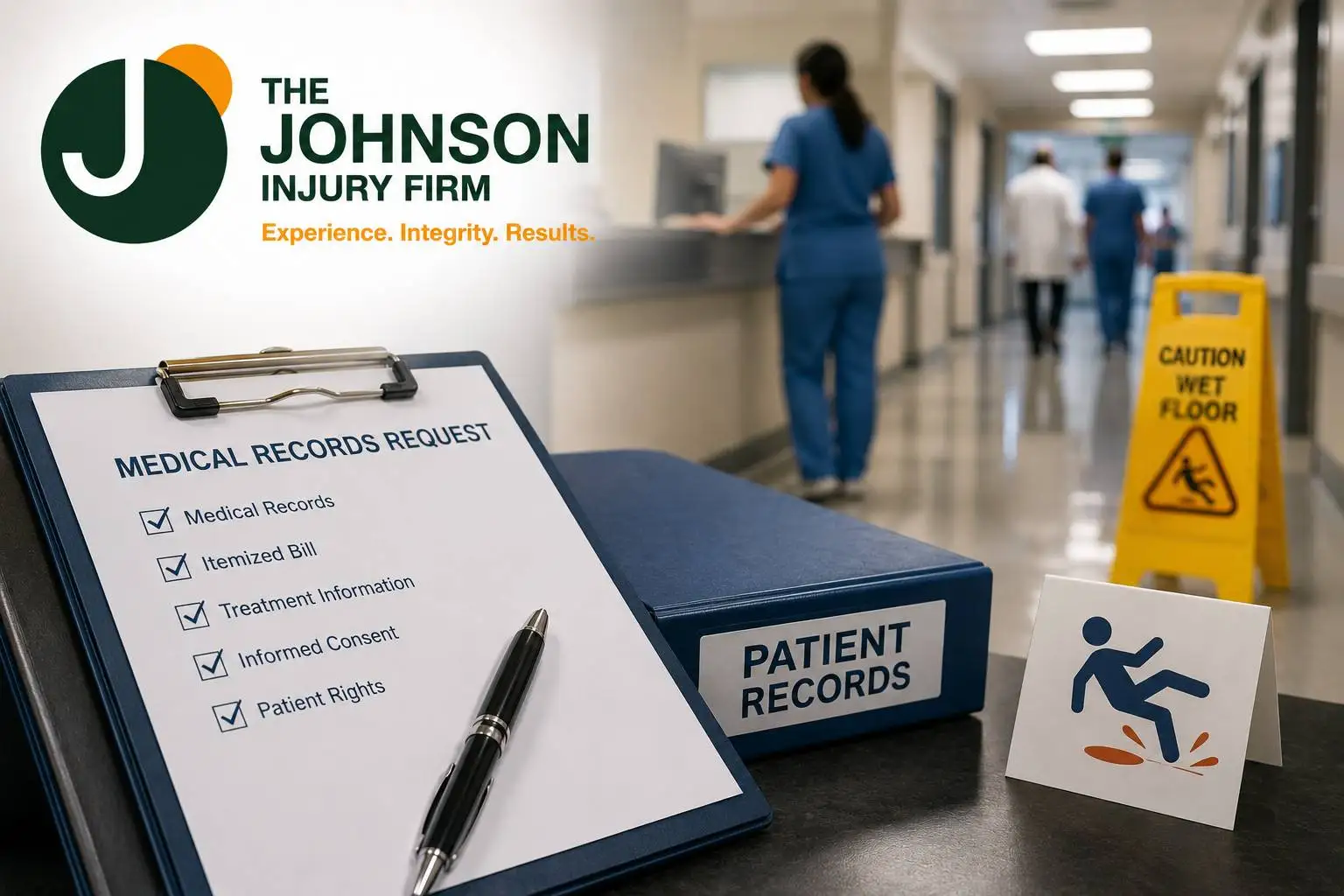
If you were injured in a slip and fall accident in Richmond, Virginia, hospitals have specific legal and ethical obligations to you as a patient. They must give you access to your full medical records upon request, provide an itemized bill, disclose any treatment decisions that may affect your recovery, and inform you of your right to seek a second opinion.
They cannot withhold records to protect another party, and they cannot discourage you from pursuing legal action. What they are not required to do is advise you on your legal rights or help you build a personal injury claim. That is where an experienced personal injury attorney in Richmond becomes essential.
About The Johnson Injury Firm
The Johnson Injury Firm represents injured people in Richmond and across Central Virginia. Our attorneys handle serious personal injury cases, including slip-and-fall accidents caused by negligent property owners. We are a local firm with deep knowledge of Virginia law, and we work directly with our clients from the first call to the final resolution.
We do not hand cases off to paralegals. We do not take cases we cannot win. If you were injured due to someone else’s negligence, we want to hear from you.
Why This Question Matters After a Slip and Fall in Richmond
After a slip-and-fall accident, most injured people focus on getting treatment. That is the right priority. But what happens in the hospital during those first hours and days can directly affect the value of a future personal injury claim.
Hospitals in Virginia operate under federal and state regulations. Those rules create specific rights for patients. Understanding those rights helps you protect your case before you ever speak with an attorney.
What Virginia Law Requires Hospitals to Provide
Your Medical Records
Under the Health Insurance Portability and Accountability Act, commonly known as HIPAA, every patient has the right to access their own medical records. In Virginia, the Health Records Privacy Act adds further protections.
A hospital must respond to a records request within 30 days. They can charge a reasonable copying fee, but they cannot deny access without a legally valid reason. For slip-and-fall victims, these records are critical evidence.
They document the nature of your injuries, the timeline of treatment, the language providers used to describe your condition, and the total cost of care. An insurance adjuster or defense attorney will use these same records. You need them too.
An Itemized Bill
Virginia law gives patients the right to request an itemized statement of charges. This is different from the summary bill most people receive. An itemized bill lists every service, procedure, medication, and facility fee by line item.
This document matters in a personal injury case because damages include all medical expenses directly caused by the accident. An itemized bill makes it harder for an insurance company to dispute the necessity of your treatment.
Informed Consent Disclosures
Before any procedure, a hospital must explain what is being done, why it is being done, and what the known risks are. This requirement exists under both federal standards and Virginia’s Medical Malpractice Act. If treatment decisions were made without your informed consent, that is a separate legal issue from your slip and fall claim, but it is worth noting to your attorney.
Notice of Patient Rights
Under the Medicare Conditions of Participation, hospitals that receive federal funding must give patients a written notice of their rights upon admission. That document includes your right to make decisions about your care, your right to file a grievance, and your right to receive information in a language you understand. Most people never read this form. In a personal injury case, it establishes a baseline of what the hospital was obligated to communicate.
What Richmond Hospitals Are NOT Required to Tell You
This is where many slip and fall victims are caught off guard.
Hospitals are not required to:
- Tell you that another party may be legally liable for your injuries
- Advise you to preserve evidence from the scene of the accident
- Recommend that you contact a personal injury attorney
- Warn you about Virginia’s statute of limitations for injury claims
- Explain how your medical documentation could affect a future lawsuit
Medical providers in Richmond are focused on treatment, not litigation. They may interact with insurance representatives on billing matters, but they have no legal obligation to protect your personal injury claim. That responsibility falls entirely on you, which is why acting quickly and consulting an attorney matters.
The Virginia Statute of Limitations: A Hard Deadline
Virginia Code Section 8.01-243 gives injured people two years from the date of the accident to file a personal injury lawsuit. That clock starts on the day of the fall, not the day you leave the hospital.
Two years may sound like a long time. It is not. Evidence disappears. Witnesses become unavailable. Surveillance footage gets overwritten. Property owners make repairs that eliminate proof of the hazard. The earlier our attorneys can begin investigating your case, the stronger your claim will be.
How Hospital Documentation Affects Your Slip and Fall Case
The way your injury is documented at the hospital can help or hurt your claim. Consider the following comparison:
| Documentation Factor | Helpful to Your Claim | Potentially Harmful |
| Injury described in detail | Yes | Vague descriptions create disputes |
| Cause of injury noted (e.g., wet floor) | Yes | Omitting cause allows insurer to argue otherwise |
| Imaging ordered promptly | Yes | Delayed imaging suggests injury was not serious |
| Treatment consistent with injury | Yes | Gaps in treatment raise doubt about severity |
| Follow-up care documented | Yes | No follow-up weakens damages argument |
The chart above illustrates why what gets written in your medical record is not a passive event. It shapes how your injuries are perceived by insurance companies and, if necessary, by a jury.
Common Locations for Slip and Fall Accidents in Richmond
Richmond presents specific risk environments. Wet floors near the James River floodplain, uneven pavement near older commercial corridors such as Broad Street and Cary Street, and poorly maintained walkways near large facilities like VCU Health System and Bon Secours Richmond are recurring hazard categories in local personal injury cases.
Property owners in Virginia owe a duty of care to lawful visitors. If a hazardous condition existed and the owner knew about it or should have known about it, they may be held liable. Virginia follows a strict contributory negligence standard, which means that if you are found even one percent at fault, you may be barred from recovery. This makes the quality of your legal representation critical.
How Our Attorneys Use Hospital Records to Build Your Case
When our team reviews a new slip-and-fall case, hospital records are among the first documents we obtain. We look for consistency between the mechanism of injury and the documented findings. We identify whether the emergency room or treating physician noted the circumstances of the fall.
We examine treatment timelines for any gaps that a defense attorney could exploit. We also work with medical experts when the extent of injuries is disputed. In cases involving traumatic brain injuries, spinal damage, or fractures, having a qualified expert who can interpret and explain the records to a jury is often the difference between a fair settlement and an inadequate one.
Take the Next Step: Talk to a Personal Injury Lawyer in Richmond
If you were injured in a slip and fall accident in Richmond, you do not have to figure this out alone. Our attorneys at The Johnson Injury Firm understand how Virginia law works, what insurance companies look for, and how to build a case that reflects the full impact of your injuries.
Contact a personal injury attorney in Richmond who will evaluate your case, explain your options, and fight for the compensation you are owed. We offer free consultations, and we never charge a fee unless we recover for you.
Frequently Asked Questions
Can a Hospital Refuse to Give Me My Medical Records After a Slip and Fall?
Generally, no. Under HIPAA and Virginia’s Health Records Privacy Act, you have the right to access your own medical records. A hospital may charge a reasonable fee for copies and may have up to 30 days to respond. If a hospital denies your request without a legally valid reason, that refusal may itself be a violation of federal law.
Does What I Say in the Emergency Room Affect My Personal Injury Case?
Yes, it can. Statements made to hospital staff about how the accident occurred become part of your medical record. Insurance companies and defense attorneys will review those records carefully. If your account in the ER differs from what you later tell an attorney or describe in a legal proceeding, those inconsistencies will be used against you. Be accurate and consistent from the start.
Should I Tell the Hospital That I Plan to File a Personal Injury Claim?
You are not required to disclose your legal intentions to hospital staff. Providing an accurate account of how you were injured is important for your treatment and for your records. But whether you plan to pursue legal action is a separate matter that does not affect the care you receive or your right to your records.
How Long Does It Take to Settle a Slip and Fall Case in Richmond?
It depends on the severity of your injuries, whether liability is disputed, and the responsiveness of the insurance carrier. Straightforward cases with clear liability and documented damages may be resolved in several months. Cases involving serious injuries, surgery, or long-term disability often take longer and benefit from having all treatment completed before settlement discussions begin.
What If the Property Owner’s Insurance Contacts Me Before I Have an Attorney?
Do not provide a recorded statement to an insurance adjuster before speaking with an attorney. Insurance adjusters are trained to ask questions in ways that minimize the value of your claim. You have no legal obligation to give a recorded statement to the other party’s insurer. Refer them to your attorney once you have retained one.
Does Virginia’s Contributory Negligence Rule Apply to Slip and Fall Cases?
Yes. Virginia is one of only a few states that follows a pure contributory negligence standard. If a court or jury finds that you were even partially at fault for the fall, you may be barred from recovering any damages at all. This makes it essential to work with an attorney who understands how to present the facts of your case in a way that fully places responsibility on the negligent property owner.