

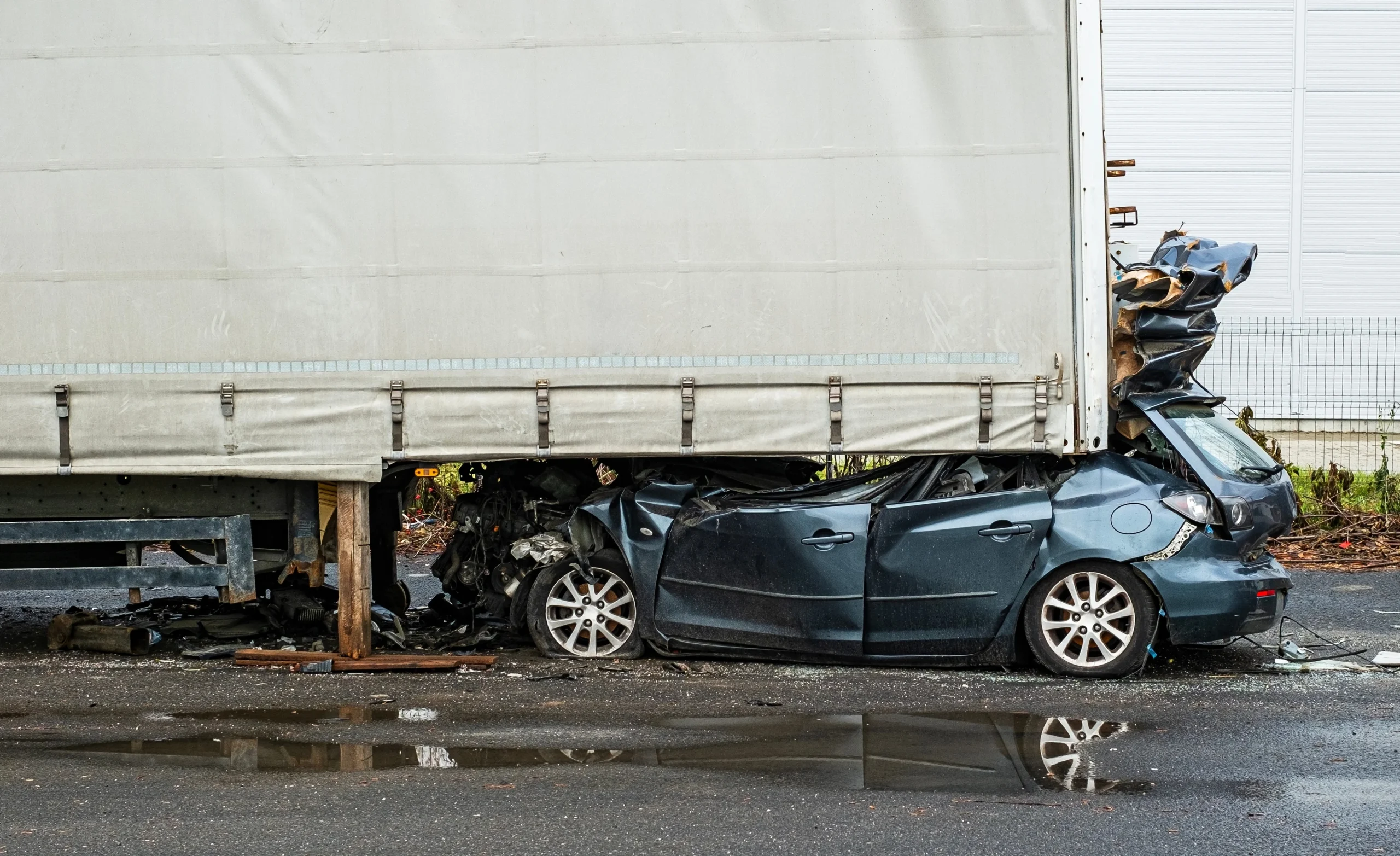
Truck accidents in Richmond, Virginia, often result in devastating injuries and long-term consequences due to the sheer size and weight of commercial vehicles. While many people assume the truck driver is always responsible, liability in these cases frequently extends far beyond the person behind the wheel.
Understanding who may be held accountable is critical for injured individuals seeking financial recovery after a serious crash. That’s why many people turn to experienced Richmond truck accident injury attorneys to help identify all liable parties early in the process.
Richmond’s location along major freight corridors such as I-95, I-64, and Route 360 means tractor-trailers, box trucks, and delivery vehicles are a constant presence. Accidents involving these vehicles often trigger complex investigations involving multiple companies, insurers, and federal regulations that do not apply to ordinary car accidents. The Johnson Injury Firm routinely represents individuals injured in these high-impact collisions.
Truck accident claims in Virginia are rarely straightforward. State traffic laws, federal trucking regulations, and corporate responsibility standards all play a role. Understanding how liability works step by step can help injured people avoid delays, lost evidence, and unfair blame.
Why Truck Accidents Are Different From Car Accidents
Truck accident cases differ significantly from standard car accident claims because commercial trucking is heavily regulated and involves multiple layers of responsibility. A single crash may involve several parties whose actions—or inaction—contributed to unsafe conditions.
Key differences include:
- Commercial drivers must follow federal hours-of-service rules
- Trucks are subject to strict maintenance and inspection requirements
- Employers may be responsible for driver conduct
- Cargo loading must meet weight and balance standards
- Multiple insurance policies may apply
In Richmond, tractor-trailer crashes frequently occur during lane changes, sudden stops, or congestion near downtown interchanges. These situations often raise liability questions that go well beyond simple driver error.
The Truck Driver’s Role in Liability
Truck drivers may be liable when their actions directly cause a crash. Common forms of driver negligence include speeding, distraction, fatigue, or impairment.
Driver-related liability issues often involve:
- Violating hours-of-service limits
- Texting or using electronic devices while driving
- Driving too fast for traffic or weather conditions
- Failing to check blind spots
- Ignoring safety training
However, driver fault is only one part of the equation. In many Richmond truck accidents, evidence shows drivers were operating under unsafe conditions created or encouraged by others.

Trucking Company Responsibility and Employer Liability
Trucking companies are often legally responsible for their drivers’ actions while on the job. Employer liability may apply even when the driver made an immediate mistake.
Common company-related liability factors include:
- Hiring drivers without proper qualifications
- Inadequate training or supervision
- Encouraging unrealistic delivery schedules
- Failing to enforce safety policies
- Ignoring prior safety violations
Companies operating through Richmond must comply with both Virginia law and federal trucking regulations. Failure to meet these standards can expose them to direct liability for resulting injuries.
Maintenance Providers and Mechanical Failures
Poor truck maintenance is a frequent cause of serious and catastrophic accidents. Brake failures, tire blowouts, and steering problems can quickly lead to loss of control.
Maintenance-related liability may involve:
- Third-party repair shops
- Fleet maintenance contractors
- In-house maintenance departments
- Failure to perform required inspections
- Use of defective replacement parts
When mechanical failures cause crashes on roads like I-95 or I-64, investigators closely examine maintenance and inspection records. Missing, altered, or incomplete records can significantly impact liability determinations.
Cargo Loaders and Shipping Companies
Improperly loaded or secured cargo can shift during transit, causing rollovers, jackknifes, or sudden loss of control. Liability may extend to the company responsible for loading the freight.
Cargo-related liability issues include:
- Overloaded trailers
- Uneven weight distribution
- Failure to secure cargo properly
- Violations of federal load regulations
- Inadequate training of loading personnel
In Richmond, trucks hauling construction materials, consumer goods, and industrial freight often travel through dense traffic areas, increasing the danger of cargo-related failures.
Truck Manufacturers and Defective Components
Some truck accidents occur due to defective parts rather than human error. Manufacturers may be held responsible when design or production defects contribute to a crash.
Defect-related liability may involve:
- Brake system failures
- Steering mechanism defects
- Tire defects
- Lighting or visibility problems
- Electronic control system malfunctions
These cases often require detailed technical analysis and expert investigation, particularly when defects are not immediately obvious after the collision.
The Role of Insurance Companies in Truck Accident Claims
Truck accidents typically involve multiple insurance policies with high coverage limits. While this may sound beneficial, it often leads to aggressive defense strategies.
Common insurance challenges include:
- Multiple insurers disputing responsibility
- Delayed investigations
- Requests for recorded statements
- Attempts to shift blame to injured victims
- Early, low settlement offers
Virginia’s strict contributory negligence rule gives insurers strong incentives to argue even minimal fault. Any allegation of partial responsibility can be used to deny compensation entirely.
Evidence That Matters in Richmond Truck Accident Cases
Strong truck accident cases depend on evidence collected quickly. Delays can result in lost or destroyed records.
Critical evidence often includes:
- Driver logbooks and electronic logging data
- Maintenance and inspection records
- Black box or event data recorder information
- Dash camera footage
- Witness statements and police reports
Reports from the Richmond Police Department or Virginia State Police often start the investigation, but they rarely tell the full story without additional evidence.
How Courts in Richmond Handle Truck Accident Cases
Due to the severity of injuries and damages involved, truck accident lawsuits are commonly filed in Richmond Circuit Court.
Court-related factors that affect cases include:
- Discovery deadlines
- Motion hearings
- Deposition scheduling
- Mediation requirements
- Trial availability
While many cases settle before trial, the possibility of litigation often plays a major role in settlement negotiations.
Common Injuries in Richmond Truck Accidents
Because of the force involved, truck accidents frequently cause life-altering injuries.
Common injuries include:
- Traumatic brain injuries
- Spinal cord damage
- Multiple fractures
- Internal organ injuries
- Severe burns and lacerations
Recovery often requires long-term medical care, rehabilitation, and extended time away from work, all of which factor into liability and compensation evaluations.
Practical Steps After a Truck Accident in Richmond
Your actions after a truck accident can directly affect liability determinations and your ability to recover compensation.
Recommended steps include:
- Seek immediate medical care
- Call law enforcement to the scene
- Photograph vehicles and road conditions
- Collect witness contact information
- Avoid detailed discussions with insurance companies
Prompt action is especially important in commercial vehicle cases, where critical records can disappear quickly.
Why Liability Beyond the Driver Matters for Recovery
Identifying all responsible parties increases the likelihood of full financial recovery. Individual drivers often do not carry enough insurance to cover severe injuries.
Broader liability allows claims against:
- Corporate trucking insurance policies
- Maintenance contractor coverage
- Cargo shipper responsibility
- Product manufacturer liability
Failing to identify every liable party can leave injured individuals facing unpaid medical bills and lost income.
How The Johnson Injury Firm Approaches Truck Accident Liability
The Virginia personal injury attorneys at The Johnson Injury Firm focus on identifying every potential source of liability in Richmond truck accident cases.
This approach emphasizes:
- Early evidence preservation
- Review of corporate safety practices
- Analysis of maintenance and cargo records
- Clear, consistent communication with clients
A comprehensive liability analysis helps ensure no responsible party is overlooked.
Moving Forward After a Richmond Truck Accident
Truck accidents can change lives in an instant, and determining responsibility is rarely simple. If you or a loved one has been injured, speaking with professionals familiar with Richmond truck accident injury attorneys can help clarify your options.
The Johnson Injury Firm is available to discuss your situation, explain how liability beyond the driver works, and help you move forward with confidence.