
When you are in an auto crash, the aftermath can feel overwhelming. You have injuries, bills piling up, mounting stress, and insurers contacting you with forms, releases, or settlement offers. They often tell you, “Just sign this and we can close your claim.” But is that truly in your best interest?
At The Johnson Injury Firm, we have seen too many clients regret signing something too soon. In our decades of representing injured people, we believe you deserve clarity and protection.
In this article, we explain what happens when you sign insurance forms after an accident, what risks you face, and when you should consult an experienced Richmond car accident attorney.
Why Insurance Companies Rush You To Sign
One question that many people search for is: “Why do insurers push me to sign releases right after a crash?”
Insurance companies benefit when claimants settle early and cheaply. If you execute a full release, you typically give up your right to seek further compensation, even if new injuries or complications later emerge. Insurers know that many crash victims do not fully realize the long-term effects of their injuries on day one.
By rushing you, they aim to lock in a minimal payout and close their file quickly. At The Johnson Injury Firm, we view that tactic as unfair leverage. Our goal is to ensure that you are treated fairly and not pressured into signing away your rights.
Common Types Of Insurance Forms You Might Encounter
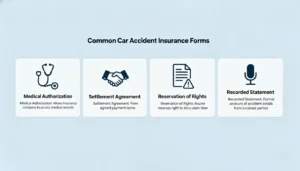
After an accident, you may be presented with several types of documents. Here are a few of the most common:
- Medical Authorization / Release of Records: Insurers may request your medical records. While it is sometimes reasonable for them to obtain records relevant to your injuries, blanket releases that allow them access to your full medical history are dangerous.
- Reservation of Rights Letters: Sometimes, insurers send letters that reserve the right to deny your claim later. Signing something similar may weaken your position if the insurer later attempts to disclaim coverage.
- Settlement Agreements / Releases: This is the most consequential form. A release or settlement document usually states that, in exchange for a sum of money, you waive all future claims related to this accident.
- Sworn Statements or Recorded Statements: These aren’t exactly “forms,” but insurers often request recorded statements, whether under oath or not, about how the accident happened. What you say can be used later against you.
Each of these documents can carry serious consequences depending on how they are drafted.
Possible Risks When You Sign Too Early
You may think: “I trust the insurer. What harm is there?” But signing prematurely can expose you to multiple risks:
1. You Waive Future Claims You Do Not Know About Yet
Many injuries manifest days, weeks, or even months later. What seems like minor pain today may develop into a serious soft-tissue injury, or you may later discover hidden damage. If you sign a full release too early, you lose the ability to seek compensation for those later problems.
2. You Give Up Your Right To Sue
Once you sign a release, the insurer can argue you have no legal claim left. Even if mistakes were made or new evidence surfaces, a properly drafted release often prevents further pursuit.
3. You May Let the Insurer Access Too Much Medical History
If your release of medical records is overly broad, the insurer may search for preexisting conditions to shift blame. That gives them leverage to downplay or deny your claim.
4. You Risk Invalidating Coverage or Reducing Your Recovery
Sometimes, a release or form you sign inadvertently triggers policy defenses or excludes key forms of compensation, such as future medical expenses or pain and suffering.
5. You Lose Bargaining Power
After signing, the insurer may feel no need to negotiate in good faith; they know you cannot come back later for more. At The Johnson Injury Firm, we always advise clients not to sign anything without consulting legal counsel first.
What You Should Do Instead

Here is a responsible approach when an insurer asks you to sign something:
- Ask For Time. You can (and should) ask for time to review any document. There is nothing wrong with saying, “I want my lawyer to see this before signing.”
- Limit The Scope. If possible, restrict medical authorizations to only those records relevant to the accident. Do not allow blanket access.
- Insist On “Without Prejudice” Language. For some preliminary offers or letters, that phrase signals you do not relinquish rights by responding or negotiating.
- Get Everything In Writing. Verbal promises from adjusters mean little. Insist on written details before signing anything.
- Call An Attorney Quickly. The sooner you bring in help, the more rights you can preserve.
At The Johnson Injury Firm, our team steps in early to safeguard your position. We review every document the insurer sends and advise whether signing helps or hurts your case.
When It Might Be Acceptable To Sign
Are there ever times when signing is acceptable? Yes, but with caution.
- Partial Releases for Specific Limited Issues. For example, a release that applies only to one particular bill or one medical provider may be acceptable if that is truly all you are giving up.
- Final Settlement Offers After Full Evaluation. Only after your injuries, prognosis, expenses, and evidence are well documented should a full release be considered.
Even then, a release should be carefully drafted with carve-outs for unknown future harms, ongoing medical costs, and unresolved issues.
The key is to understand exactly what rights you are giving up, and that understanding often requires legal expertise.
How The Johnson Injury Firm Protects You
We believe your recovery and legal rights are closely tied. As part of our representation, we:
- Review Every Document. We never let you sign anything without going through the terms in detail.
- Negotiate Stronger Protections. If a release must be signed, we push for language that preserves your right to future claims or delineates a narrow scope.
- Handle Communications With Insurers. We become the point of contact. You never have to deal with adjusters on your own.
- Preserve Your Claim’s Value. From investigation to medical documentation, we build your claim so that no insurer can slip in unfair releases or pressure tactics.
Questions You Might Be Asking
To help you think through your situation, here are some questions many people ask:
Can I back out if I already signed something?
It depends. In many cases, a properly executed release is binding. However, if the document was signed under misrepresentation or without full disclosure, there may be legal remedies.
Is it okay to grant medical records access?
Not always. The key is to limit access to the records relevant to the accident. Broad releases can allow insurers to dig into your full history.
Should I respond to insurer offers right away?
No. Give yourself time to evaluate. Early low offers usually benefit insurers, not injured parties.
Does Virginia law favor insurers here?
Virginia’s “pure contributory negligence” rule means that if you are even 1 % at fault, you may be barred from recovery entirely. That makes it absolutely critical to preserve your legal rights
When is the deadline to act?
In most personal injury claims in Virginia, you have two years from the date of injury to file suit. But waiting too long means risking loss of rights.
A Fresh Perspective: Viewing Signed Forms as “Invisible Contracts”
Many people do not think of a release as a contract, but it is one. When you sign, you are entering into a contractual agreement, giving consideration (money) in exchange for giving up rights. Because these contracts are often presented when you are under stress, lacking information, and not acting at your best, you deserve protection and counsel.
Think of releases as “invisible contracts” that can quietly extinguish your legal potential long before you even realize it.
Protecting Your Future Starts Before You Sign
Signing that piece of paper may feel like a small step, but its consequences can shape the entire outcome of your case.
If you have been injured in a crash, do not sign anything until you understand what rights you might be giving away. Let us at The Johnson Injury Firm review, advise, and safeguard your position so that you negotiate from strength, not desperation.
You do not have to face this alone.
If you are seeking a Richmond car accident lawyer, or an auto accident attorney in Richmond, or simply want a trusted accident lawyer in Richmond, Virginia, to review any documents, reach out to The Johnson Injury Firm for a free consultation. We will stand by you, protect your rights, and fight for the compensation you deserve.