In Virginia, you can file a diminished value claim against the at-fault driver’s liability insurer to recover the drop in your car’s market value after repairs. Your own collision policy usually will not pay it. You generally have five years to bring a property damage claim, but Virginia’s contributory negligence rule still applies, so any fault on your part can block recovery.
Even a well-repaired vehicle with an accident on its history report sells for less than an identical car with a clean history. That loss is real money, and Richmond drivers often leave it on the table because insurers never mention it.
What Diminished Value Means
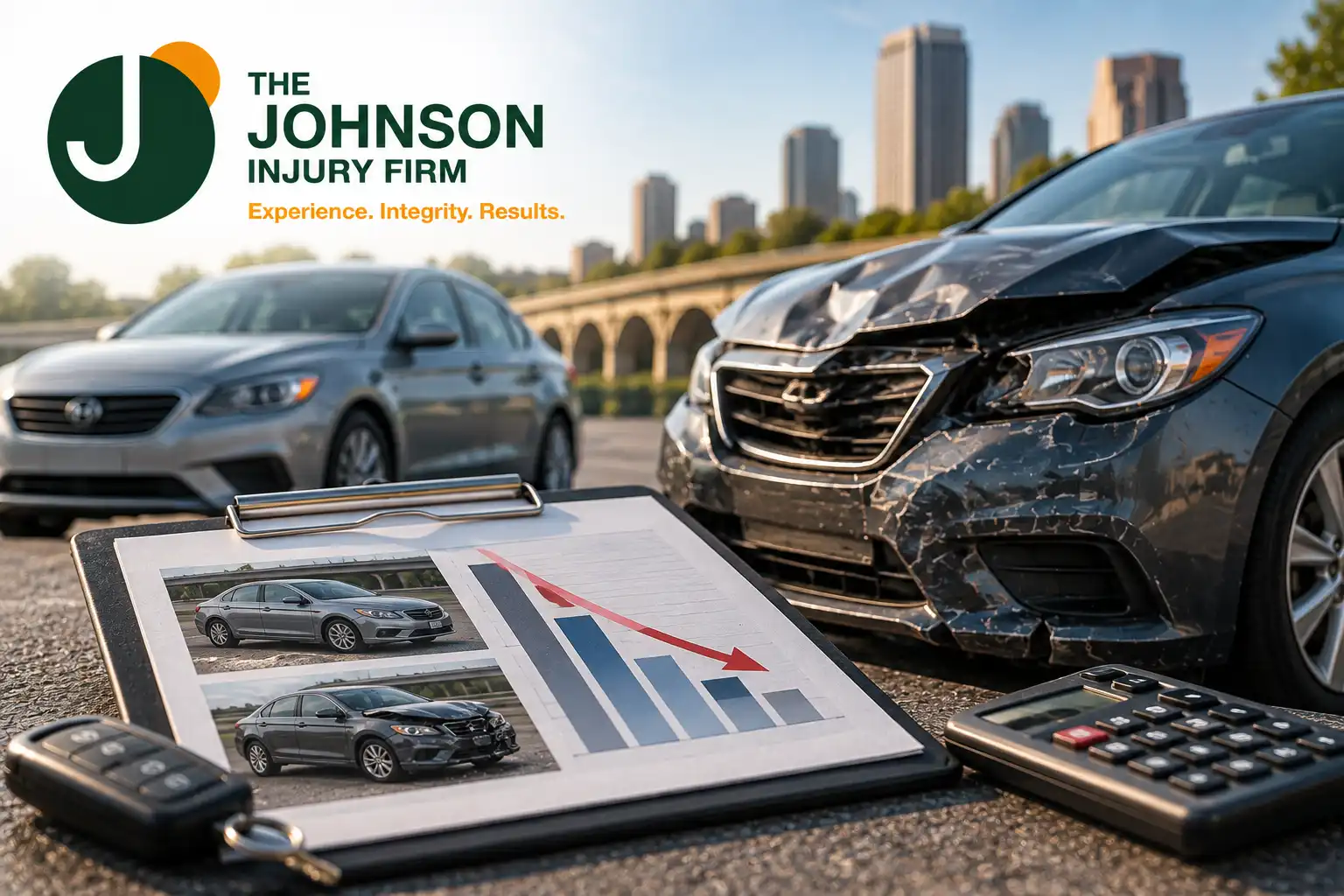
Diminished value is the difference between what your car was worth right before the crash and what it is worth after repairs. Buyers and dealers pay less for vehicles with accident history, especially when the damage involved the frame, airbags, or major structural parts. There are three common types:
- Inherent diminished value: the loss caused by the accident history itself, even with perfect repairs. This is the most common claim.
- Repair-related diminished value: additional loss caused by poor-quality repairs.
- Immediate diminished value: the difference in value right after the crash, before repairs.
Who Pays a Diminished Value Claim in Virginia
Virginia recognizes third-party diminished value claims, meaning you can seek this loss from the at-fault driver’s liability insurance. First-party claims under your own collision coverage are usually excluded by policy language. If the at-fault driver was uninsured, your uninsured motorist property damage coverage may apply, subject to its terms.
How to File a Diminished Value Claim, Step by Step
| Step | What to Do |
|---|---|
| 1. Get the repair invoice | Request a complete itemized invoice from the body shop showing every part and labor line. |
| 2. Pull a vehicle history report | A Carfax or similar report showing the accident documents why buyers will pay less. |
| 3. Get an independent appraisal | A licensed independent appraiser compares pre-crash value with post-repair market value. |
| 4. Send a written demand | Send the at-fault insurer a demand letter with the appraisal, invoice, photos, and history report. |
| 5. Negotiate | Respond in writing to low offers with comparable sales data. |
| 6. Consider court if needed | Smaller disputes can be filed in Richmond General District Court. |
Good documentation starts at the scene. Our post on what most people forget to document at the scene of a crash lists photos that help later. If you are still choosing a repair shop, see our list of top body shops in Richmond.
Pushing Back on the 17c Formula
Many insurers calculate diminished value using a method often called the 17c formula. It starts by capping the loss at 10 percent of the car’s value, then applies damage and mileage multipliers that frequently shrink the number further. The formula was not built on real market sales, and it tends to undervalue newer, low-mileage, and luxury vehicles. An independent appraisal based on actual comparable sales is your best response.
How Much Can You Recover?
For newer vehicles with significant damage, diminished value commonly falls in the range of roughly 10 to 25 percent of pre-crash value. Older, high-mileage vehicles may have little or no diminished value because the market already discounts them. Structural damage, airbag deployment, and luxury or late-model vehicles tend to produce larger claims.
Add a Loss of Use Claim
While your car is in the shop, you may also recover loss of use, usually measured by the reasonable cost of a comparable rental for the repair period. If the insurer did not provide a rental, keep receipts for rideshares or a rental you paid for yourself. A loss of use claim can be included in the same demand as your diminished value claim.
Deadlines and Contributory Negligence
Under Virginia Code 8.01-243(B), you generally must file property damage claims within five years. Personal injury claims from the same crash have a shorter two-year deadline, which we explain in “How Long Do You Have to File a Personal Injury Case in Virginia?” Virginia also follows pure contributory negligence, so if the insurer can show you were even slightly at fault, it may deny the claim entirely.
Frequently Asked Questions
Can I file a diminished value claim in Virginia?
Yes. Virginia allows third-party diminished value claims against the at-fault driver’s liability insurer.
Does my own insurance pay diminished value?
Usually not. Most Virginia collision policies exclude diminished value, so you file the claim against the at-fault driver’s insurer.
How long do I have to file a diminished value claim in Virginia?
Property damage claims generally must be filed within five years under Virginia Code 8.01-243(B).
Do I need an appraisal?
An independent appraisal based on comparable sales is the strongest evidence and the best answer to the insurer’s formula.
Can I claim a rental car too?
Yes. You can claim loss of use, usually measured by reasonable rental costs during repairs, alongside diminished value.
Talk to a Richmond Car Accident Lawyer
The Johnson Injury Firm helps Richmond drivers recover every category of loss after a crash, including injuries, diminished value, and loss of use. When you call, our team will ask about your crash, your vehicle, and any offers you have received, then explain how much of your claim may still be unpaid. Learn more about our Richmond car accident lawyer services.