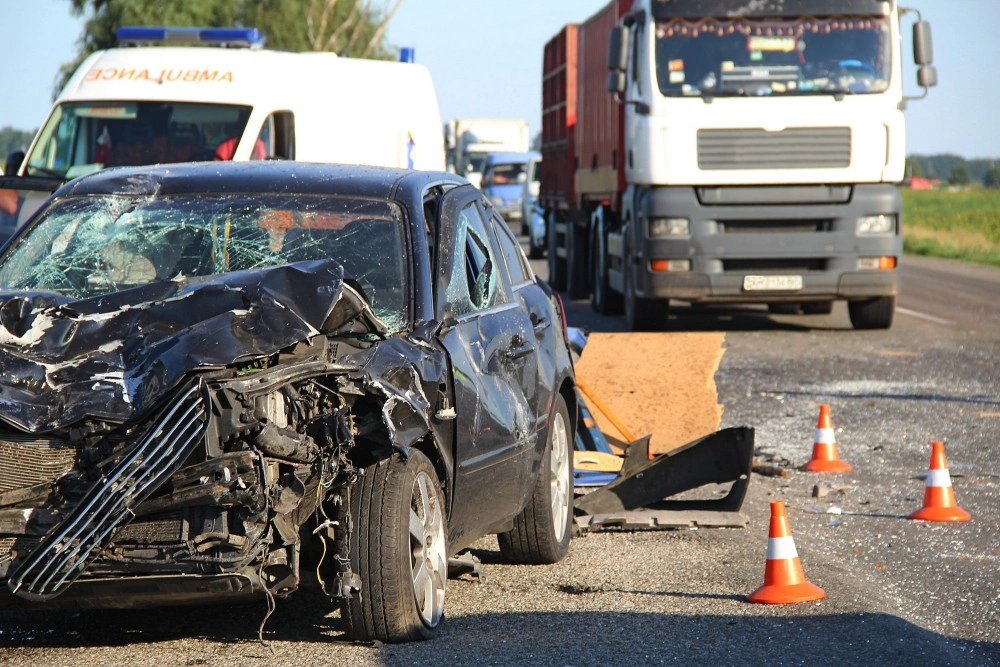
Selecting an experienced Virginia truck accident law firm can be the best move to make after a life-changing incident. Regardless of whether this accident occurred on Interstate 95 or some Richmond streets, its effects may leave you reeling. Virginia DMV figures from 2022 show more than 5,500 truck accidents.
This accounts for nearly 5% of the state’s total accidents that year. In many cases, insurance alone isn’t enough, especially concerning federal regulations on how the accident occurred.
Difference between Trucking Accident Cases and Regular Car Accident Cases
When two cars collide, the case usually involves negligence and traffic law violations by one of the drivers. Truck accident cases are more complex due to the dynamics of the accident and its large financial implications.
Effects of Vehicle Mass and Size
The most significant discrepancy between the two lies in their vehicle weights. A semi-truck without cargo weighs 36,000 pounds, but its maximum weight with cargo is 80,000 pounds. Need to note that this is the legally allowed maximum; however, many trucks operate illegally with a higher weight, which can impact any claim.
The average car weight is 4,000 pounds. The presence of trucks on the road makes it extremely dangerous for drivers of smaller vehicles, as even minor collisions between them can cause severe injuries.
Higher Insurance Requirements and Policy Limits
The federal government requires commercial vehicles to carry higher insurance because they pose a greater risk of damage. The state of Virginia requires commercial vehicles to carry insurance exceeding $750,000, while standard car insurance policies provide coverage of $50,000.
Insurance companies conduct thorough investigations and often dispatch “rapid response teams” within hours “rapid response teams” right to the scene of the accident within hours after the accident in order to prepare their case.
This means you’ll be dealing with powerful insurance companies from day one, which is why it is so important to talk to a commercial truck accident lawyer Richmond families trust.
Federal Regulations and Liability in Virginia
The commercial trucking industry in Virginia is regulated not only by the state’s own laws and regulations. Rather, federal regulations must be adhered to. Any violation of these will help prove liability.
Hours of Service (HOS) Standards
Driver tiredness is a major factor in many truck accidents. To stop this, the FMCSA made Hours of Service rules that limit how long a driver can stay behind the wheel.
- The 11-Hour Rule: Drivers generally cannot drive more than 11 hours after being off duty for 10 hours.
- The 14-Hour Window: A driver cannot drive past the 14th hour after starting their shift.
- Electronic Logs: Modern trucks have Electronic Logging Devices (ELDs) that automatically track driving time. Checking these logs helps a Virginia truck accident law firm see if a driver was illegally tired at the time of the crash.
Maintenance and Inspection Requirements
Truck firms must conduct periodic safety inspections on all vehicles. They must conduct a daily inspection of their braking system, tires, and steering. If an 18-wheeler accident in Virginia is due to a mechanical problem, the maintenance logs may reveal whether the company was negligent in failing to fulfill its safety responsibilities in order to operate the truck.
Determination of Responsible Parties in a Trucking Accident
In the case of a typical car crash, only the vehicle operator is legally responsible. Truck accidents often involve multiple liable parties. Identifying all responsible parties is important because multiple sources of compensation may be available for your damages.
The Motor Carrier (Trucking Company)
A trucking company is generally responsible for what its employees do. They might also be directly at fault for:
- Failing to conduct proper background checks.
- The organization provides insufficient training to drivers for handling hazardous road conditions.
- The company forces drivers to exceed speed limits and skip rest breaks because it demands they complete unsafe work within impossible time frames.
Third-Party Companies
The source of the accident might not always be the driver.
- Cargo Handlers: If the cargo was not properly loaded and was the reason the vehicle overturned, the handler would be at fault.
- Maintenance Companies: If the automobile’s braking system was not properly maintained, the company that performed the service could be liable.
- Manufacturer: In the event that the steering system, for example, had been made with errors in its manufacturing process, the manufacturer would be liable.
Important Evidence and the Significance of Preservation
The weeks following a truck accident show how vital available evidence actually is. These cases often rely on digital records that are not included in standard police reports and must be formally requested. An experienced attorney for truck accidents in Richmond understands how to obtain essential information before it is permanently lost.
The “Black Box” (ECM Data)
Most current truck models include an Electronic Control Module system, which people commonly refer to as a “black box.” This device records data from the seconds before a crash, including speed and braking. The system records this data within 30 days, but it can do so earlier when the truck resumes its driving operations.
The Spoliation Letter
Virginia truck accident law firms typically begin by sending a spoliation letter to the trucking company. The trucking company receives this document as a formal legal notification, requiring it to preserve all crash-related evidence. The absence of this document enables a company to dispose of its records, thus resulting in the loss of essential proof needed for your lawsuit.
The Importance of Expert Legal Knowledge
Due to the gravity and complexity involved, having just any general injury attorney may not suffice. Reading the federal regulations and conducting electronic data review requires expertise in truck injury cases.
Resource Allocation and Experts
Investigating a truck crash often means hiring experts to rebuild the scene and check the black box data. A specialized Virginia truck accident law firm has the resources to cover these costs upfront, ensuring the case is built right from the start.
Practical Representation
A lawyer familiar with federal regulations can identify where a company cut corners. Whether it is a driver qualification issue or bad maintenance, knowing where to look can make the difference in proving the truck was 100% at fault under Virginia’s tough rules.
Protecting Your Future After a Serious Accident
If you need to file a commercial truck accident claim, having the right information is essential. These claims have specific laws, and it’s essential that you do something fast since there are other parties involved.
If you’ve been involved in a truck accident, speaking with an experienced attorney can help you understand your options. Call 804-JUSTICE today for a free consultation. Our team provides clear steps to help you move forward with your recovery while we handle the legal work for you.
Frequently Asked Questions
What if the trucking company says the accident was my fault?
Virginia uses a rule called “pure contributory negligence.” In this situation, if you are found even 1% at fault, you might be blocked from getting any money. This is why using data like the black box is so important to prove the truck was fully responsible.
How long do I have to file a claim in Virginia?
Generally, you have two years from the date of the accident. However, since things like driver logs can be lost quickly, it is best not to wait too long before calling a Virginia truck accident law firm.
What is a “Spoliation Letter”?
It is a formal notice that legally tells the trucking company to save evidence. Think of it as a “hold” on their files. It is different from a “Letter of Protection,” which is about medical bills.
Can I sue the trucking company even if the driver was an independent contractor?
Yes. In many situations, federal law holds the trucking company responsible for the vehicle if it was operating under its official DOT authority at the time of the crash.
Do I have to pay for the accident experts upfront?
Most injury firms work on a “contingency fee.” This means the firm pays for the investigation, and you only pay them back if they win your case.