
Slip-and-fall accidents in Richmond grocery stores occur more often than many people expect, especially in busy locations with constant foot traffic and frequent product handling. When a customer falls due to a spill, uneven flooring, or another unsafe condition, injuries can be serious, and recovery can derail day-to-day life.
Understanding how these accidents happen, what to do afterward, and how responsibility is evaluated matters—particularly in Virginia, where the rules are less forgiving than most people realize. Many injured shoppers contact Richmond accident lawyers when they’re unsure how to protect themselves after a fall.
Grocery stores throughout Richmond, including areas near Broad Street, Midlothian Turnpike, Hull Street Road, and Staples Mill Road, deal with nonstop activity from customers, employees, and delivery crews.
Spills, dropped items, and tracked-in moisture are common. A hazard can appear quickly, and if it isn’t addressed in time, a single moment can lead to long-term harm. The Johnson Injury Firm works with people injured in these retail settings and helps them understand how local store practices and Virginia’s liability rules affect slip-and-fall claims.
Virginia premises liability law places duties on property owners, but compensation is never automatic. Evidence, timing, and documentation often determine whether a grocery store can be held responsible.
Why Grocery Stores Are Common Sites for Slip and Fall Accidents
Grocery stores create risks you don’t see in many other retail spaces. Stocking happens constantly. Refrigeration systems run nonstop. Customers handle products, set items down, and track moisture inside. All of that increases the odds that a hazard forms on the floor before anyone spots it.
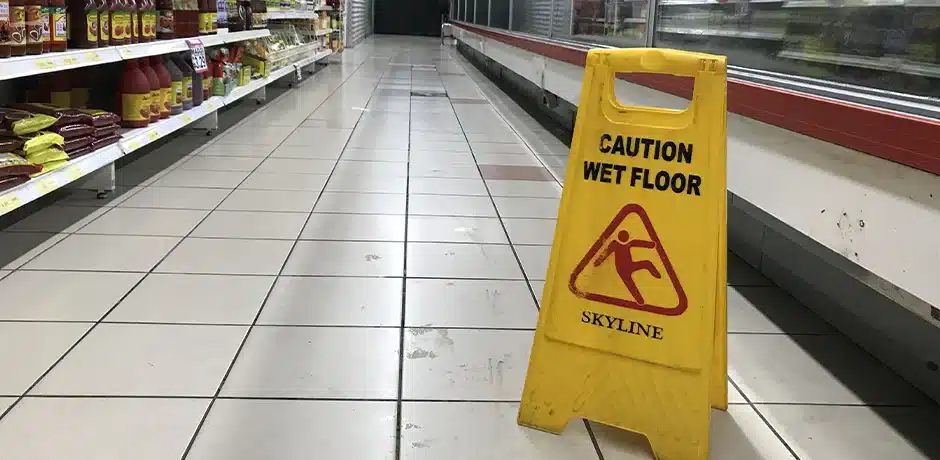
The most common grocery store hazards include spills from produce misting systems, leaking refrigeration or freezer units, dropped food items in aisles, wet floors from cleaning without proper warnings, rainwater tracked in near entrances, and uneven mats or floor transitions. In Richmond, heavy evening and weekend traffic can make it harder for staff to detect and fix issues quickly.
Common Injuries From Grocery Store Slip and Falls
Slip and fall accidents can cause significant injuries, especially for older adults or anyone with existing health conditions. Falls often happen fast and without time to brace properly, which increases the chance of serious impact.
Common injuries include fractures in the wrist, arm, ankle, or hip, knee injuries, back and spinal injuries, head injuries and concussions, and soft tissue injuries. Even a fall that seems minor at first can turn into long-term pain, reduced mobility, and extended time away from work.
Virginia Premises Liability Rules and Grocery Stores
Virginia law requires grocery stores to take reasonable steps to keep their premises safe for customers. Liability often depends on whether the store knew—or should have known—about a hazardous condition and failed to address it in a reasonable timeframe.
Key issues that typically control the case include whether the store created the hazard, how long the hazard existed before the fall, whether employees regularly inspected the area, whether warning signs were used appropriately, and whether the hazard was considered “open and obvious.” These points are also where disputes with insurance companies usually begin.
Immediate Steps to Take After a Slip and Fall in a Grocery Store
What you do right after a fall can affect both your health and your ability to pursue a claim. The goal is simple: document what happened before the scene changes and get medical care before insurers start questioning the injury.
Here are the steps that usually matter most:
- Report the fall to store management immediately and ask that it be documented
- Request an incident report (and a copy if they’ll provide one)
- Get medical attention as soon as possible
- Photograph the hazard and surrounding area before it’s cleaned or moved
- Collect witness names and contact information
- Preserve the clothing and shoes you were wearing
In many Richmond grocery stores, surveillance footage may exist—but it can be overwritten quickly. Prompt reporting matters because it helps preserve a timeline and increases the chance that video is still available.
The Importance of Incident Reports
An incident report is often the earliest official record of the fall. It usually captures the time, location, and basic description of what happened.
Incident reports may include the date and time of the fall, the location in the store where it occurred, the hazard as described, employee observations, and witness information. These reports are not an admission of fault, but they help establish timing and confirm that the incident was reported and documented.

Medical Treatment and Documentation After a Fall
Medical records are critical for linking injuries directly to the fall. When treatment is delayed, insurers often argue that the injury came from something else or wasn’t serious.
Documentation may include ER or urgent care records, imaging results, follow-up notes, physical therapy records, and pain management documentation. Many Richmond residents receive care through local hospitals, orthopedic offices, and rehab providers. Consistent treatment supports both recovery and the credibility of the claim.
Evidence That Matters in Grocery Store Slip and Fall Cases
Slip-and-fall cases often come down to evidence. If the key proof is missing, insurers tend to deny responsibility or shift blame to the customer.
The strongest evidence typically includes:
- Photos of the hazard and the surrounding area
- Surveillance video
- Witness statements
- Store inspection and cleaning logs
- Employee training records
- Medical records tying injuries to the fall
In a busy store, hazards may be cleaned up quickly after a fall, which is why early documentation can be the difference between a strong claim and a weak one.
How Grocery Store Insurance Companies Evaluate Claims
Most grocery stores are insured by large carriers that scrutinize these claims aggressively. Their focus is minimizing payouts, and they often look for ways to deny liability entirely.
Common strategies include claiming the hazard was temporary, arguing the store had no notice, alleging the customer wasn’t paying attention, disputing the severity of injuries, or dragging out the process with delays. Virginia’s contributory negligence rule makes this even more important, because insurers can deny compensation if they can pin even slight fault on the injured person.
Contributory Negligence and Slip and Fall Accidents
Virginia uses a strict contributory negligence standard. That’s a big deal. It means if the injured person is found even slightly at fault, they may be barred from recovering compensation.
Insurers often try to use this rule by questioning footwear, alleging distraction (including phone use), arguing the shopper should have seen the hazard, or claiming lighting/visibility made the condition “obvious.” This is why clear evidence and careful documentation are so important in Richmond slip and fall cases.
Common Grocery Store Defenses After a Fall
Grocery stores often rely on a familiar set of defenses. Knowing them helps injured shoppers understand what to expect.
Common defenses include claims that the hazard was open and obvious, the customer should have noticed the spill, the store didn’t have enough time to fix it, warning signs were already in place, or the fall occurred in an area not controlled by the store. These defenses often shape the early tone of negotiations.
Timeline of a Grocery Store Slip and Fall Claim
Slip and fall claims follow a general progression, but timelines vary depending on injuries and whether liability is disputed.
Typically, the process involves immediate reporting and medical treatment, an initial insurance investigation within weeks, ongoing treatment over months, claim evaluation after medical stabilization, and then settlement discussions—or litigation if the case can’t be resolved. Serious injuries usually extend the timeline because medical recovery and documentation take longer.
How Richmond Courts Handle Slip and Fall Cases
Slip and fall cases may be filed in Richmond General District Court or Richmond Circuit Court depending on the damages involved. Courts typically focus on whether the store had notice of the hazard, how reasonable inspection practices were, whether witness testimony is consistent, whether medical records support the injury claim, and the credibility of everyone involved. Cases with clean documentation tend to move more efficiently than cases built on assumptions.
Local Grocery Store Conditions That Increase Risk
Certain store conditions increase the chance of a slip and fall—especially when combined with heavy foot traffic.
Examples include older flooring materials, humidity affecting slick surfaces, poor mat placement near entrances, crowded aisles during peak hours, and self-service food areas where spills happen frequently. Evidence showing these conditions played a role may be relevant to liability.
Practical Guidance for Injured Shoppers During Recovery
While healing is the priority, a few practical habits can protect a claim and reduce stress later. Follow medical recommendations closely, keep organized records of bills and missed work, write down pain levels and daily limitations, avoid posting about the incident on social media, and save receipts for injury-related expenses. Small details add up fast, especially when insurers are looking for reasons to deny or undervalue the case.
Why Grocery Store Slip and Fall Cases Require Careful Evaluation
These cases are rarely straightforward. Grocery stores often have formal inspection routines, multiple employees involved, and well-practiced insurance responses. A real evaluation looks at staffing and store size, inspection frequency, the nature of the hazard, how long it existed before the fall, and how the store responded afterward. A thorough review can clarify whether store negligence truly played a role—or whether the evidence isn’t strong enough to push forward.
How The Johnson Injury Firm Approaches Grocery Store Slip and Fall Cases
The Johnson Injury Firm helps injured shoppers understand their options after slip and fall accidents in Richmond grocery stores. Familiarity with local retailers, insurance practices, and court procedures helps bring clarity early, when decisions matter most.
This approach typically emphasizes early evidence review, coordination with medical providers, close attention to store policies and records, and clear communication throughout the claim process. Understanding the full picture supports a fair evaluation of liability and damages.
Moving Forward After a Slip and Fall in a Richmond Grocery Store
A slip and fall in a Richmond grocery store can disrupt health, work, and daily life instantly. Knowing how liability is evaluated, what evidence matters, and how timelines usually unfold can reduce uncertainty during a stressful time.
If you were injured and need guidance, connecting with Richmond slip-and-fall lawyers from The Johnson Injury Firm can help you understand the next steps, protect your rights, and move forward with greater confidence.