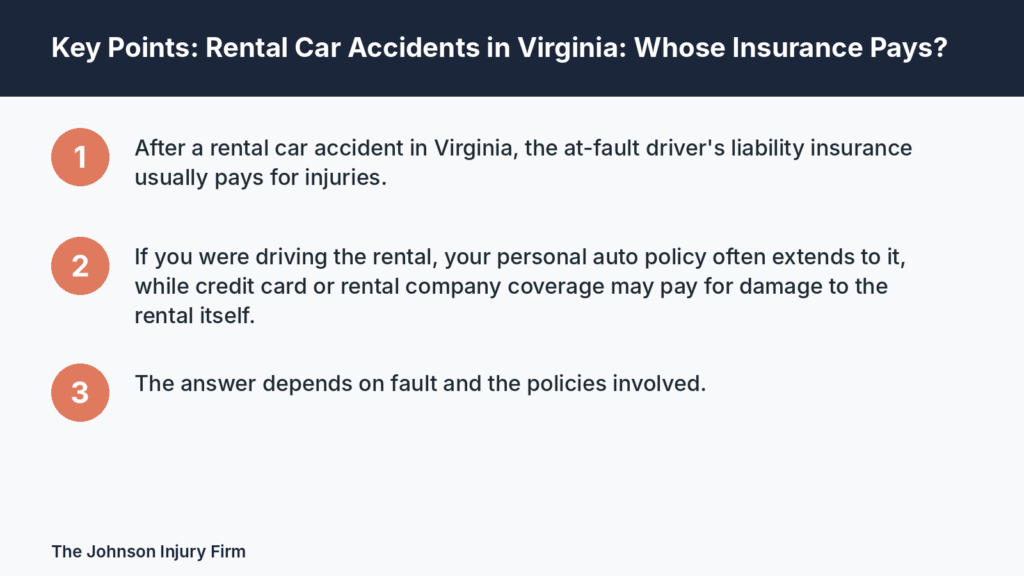
After a rental car accident in Virginia, the at-fault driver’s liability insurance usually pays for injuries. If you were driving the rental, your personal auto policy often extends to it, while credit card or rental company coverage may pay for damage to the rental itself. The answer depends on fault and the policies involved.
Holiday travel sends thousands of people through Richmond International Airport and along I-95 and I-64 in rental cars. A crash in an unfamiliar car adds confusion to an already stressful situation. Many drivers are unsure whether their own insurance, the rental company, or a credit card covers the damage and injuries.
Here is how coverage usually works in Virginia.
If Another Driver Caused the Crash
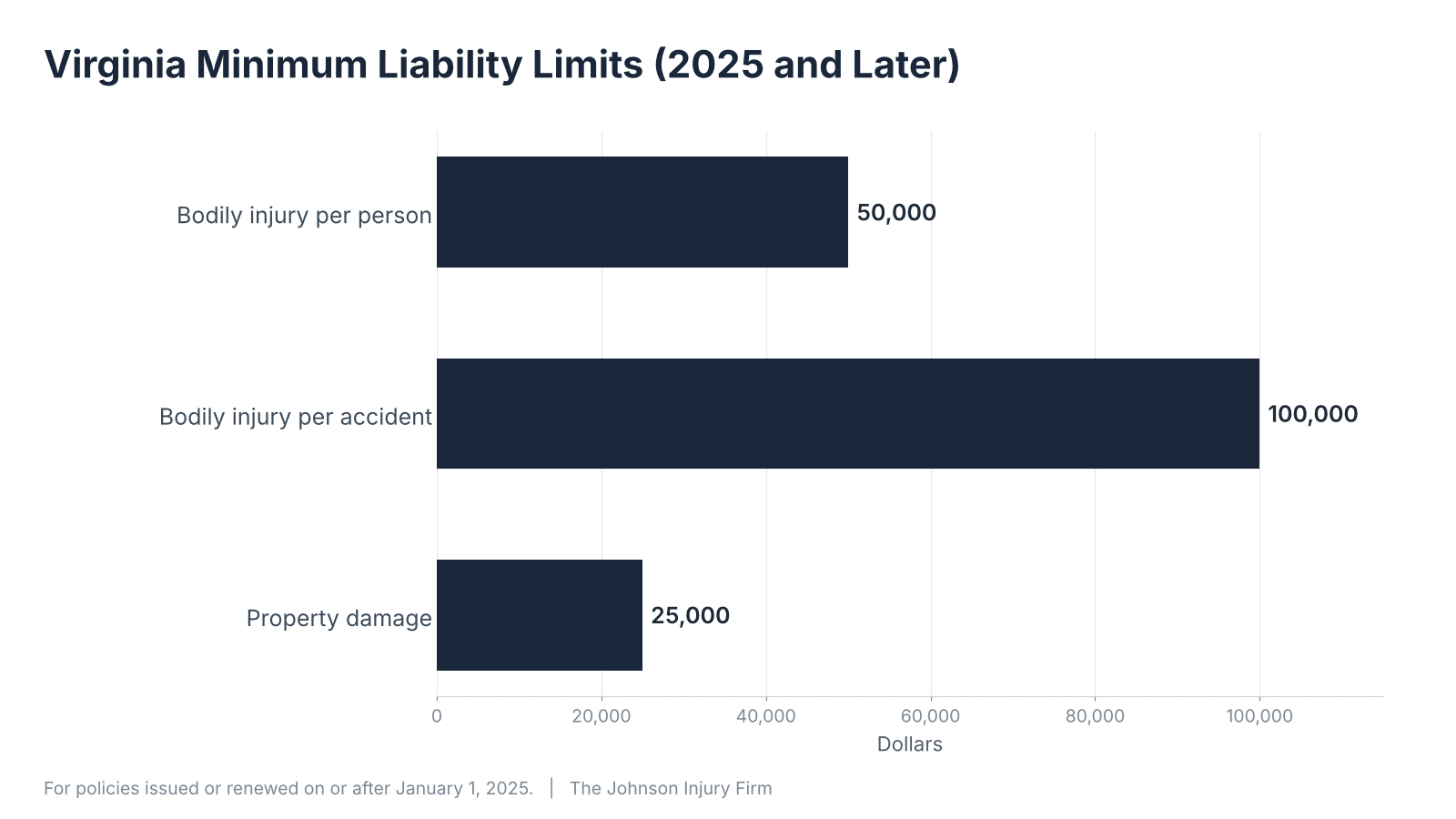
When another driver is at fault, that driver’s liability insurance generally covers your injuries and the damage to the rental. Virginia’s minimum liability limits are $50,000 per person and $100,000 per accident for bodily injury and $25,000 for property damage for policies issued or renewed since January 1, 2025. Because Virginia follows contributory negligence, the other insurer may try to argue you were partly at fault. Learn more about our Richmond car accident lawyer services.
If You Were Driving the Rental
Your personal auto policy often extends liability coverage to a rental car you drive for personal use. It may also cover damage to the rental if you carry collision and comprehensive coverage. Check your policy for limits, deductibles, and exclusions, especially for business travel or long-term rentals.
Rental Company Coverage Options
- Collision damage waiver or loss damage waiver, which waives your responsibility for damage to the rental
- Supplemental liability insurance, which adds liability coverage above state minimums
- Personal accident insurance, which covers medical costs for you and passengers
- Personal effects coverage for belongings in the car
These products vary by company, and buying them may make sense if you lack personal auto coverage.
How Rental Car Coverage Products Work
Each rental counter product covers something different. Supplemental liability insurance pays for injuries and damage you cause to others, above the limits the rental company already provides. A collision damage waiver is not technically insurance; it is the rental company agreeing not to charge you for damage to its car, usually with exclusions for things like driving on unpaved roads, unauthorized drivers, or driving under the influence.
Personal accident insurance pays limited medical and death benefits for you and your passengers, often overlapping with health insurance you already have. Personal effects coverage pays for belongings stolen from the car, which homeowners or renters insurance may already cover.
Before buying any of these, check what your auto policy, health insurance, and credit card already provide. Duplicate coverage adds cost without adding much protection.
Credit Card Rental Coverage
Many credit cards provide coverage for damage to a rental car when you pay with the card and decline the rental company’s collision waiver. Most card benefits cover only damage to the rental, not injuries or liability to others. Some coverage is secondary, meaning it pays after your personal auto insurance.
To activate card coverage, you usually must reserve and pay for the entire rental with that card and decline the rental company’s collision damage waiver. Primary coverage pays first, so you may not need to file with your own auto insurer. Secondary coverage pays only what your auto policy does not, such as your deductible.
Common limits include exclusions for certain vehicles, such as trucks, luxury cars, and large vans, rentals longer than a set number of days, and rentals in some countries. Call the number on the back of your card or review the benefits guide before you travel, and keep the rental agreement and receipts.
Rideshare and Peer-to-Peer Rentals
Cars rented through peer-to-peer platforms or used for rideshare driving may have different coverage rules. Personal auto policies sometimes exclude these uses. Review the platform terms carefully.
If You Were a Passenger or Pedestrian
If you were hurt as a passenger in a rental car or struck by a rental car driver, the claim usually goes against the driver’s coverage first. Your own uninsured or underinsured motorist coverage may also help if the driver lacked enough insurance. Under federal law, rental companies generally are not liable just for owning the car unless they were negligent.
Damage Claims From the Rental Company
Rental companies may bill renters for repairs, loss of use while the car is out of service, administrative fees, and reduced value. Ask for an itemized invoice and repair estimate before paying. If another driver caused the crash, the at-fault driver’s insurer should pay these charges. Your own insurer or credit card benefit may also cover some or all of them, depending on the policy terms. Keep all rental agreements and receipts, since coverage often depends on how the rental was paid for and which options you accepted.
Medical Payments Coverage
Medical payments coverage on your own auto policy, if you carry it, may help pay medical bills regardless of fault. Health insurance may also cover treatment, subject to reimbursement from any settlement.
What to Do After a Rental Car Accident
- Call 911 and get a police report.
- Photograph all vehicles and the scene.
- Notify the rental company and follow its reporting rules.
- Notify your own insurer and credit card company if they may provide coverage.
- Get medical care and keep records.
- Avoid admitting fault to anyone.
Because contributory negligence can bar recovery, it is wise to talk with a lawyer before giving a recorded statement. See how Henrico County car accident claims are handled.
Frequently Asked Questions
Who pays if I crash a rental car in Virginia?
It depends on fault. The at-fault driver’s insurance pays first, and your own policy may cover you as the renter.
Does my car insurance cover rental cars?
Often yes for personal use, but check your policy limits and exclusions.
Does credit card coverage pay for injuries?
Usually not. Most card benefits cover only damage to the rental car.
Is the rental company liable for a crash?
Generally not, unless the company was negligent.
Should I buy the rental company’s insurance?
It can make sense if you lack personal auto coverage or want extra protection.
What if the other driver was uninsured?
Your uninsured motorist coverage may help pay for injuries.
What if I do not have any rental car insurance?
You may be personally responsible for damage to the rental and for injuries you cause to others. The rental company may provide only state minimum liability coverage, and it can bill you directly for repairs and loss of use.
Talk to a Richmond Car Accident Lawyer
The Johnson Injury Firm represents people hurt in rental car crashes throughout Richmond, Henrico, and Chesterfield. When you call, our team will ask about the crash, the rental, and any applicable policies, then explain who should pay. Learn more about our Richmond car accident lawyer services.